Fine-tune follower timing, and configure Local Conductor start lead and display name when this device hosts sync. Usually no changes are needed.
Conductor Sync Settings
Conductor Sync Settings
Conductor Sync Settings fine-tune how PagePilot Viewer follows an external Conductor or a Local Conductor. If you do not use Conductor sync, you do not need to change anything here.
Open this screen from "Sync Details" in Global Settings. If you arrived here from search, first decide whether this device is following another Conductor or hosting Local Conductor for nearby Viewers.
The screen is split between follower-side and host-side settings. Which section matters depends on the role of this device.
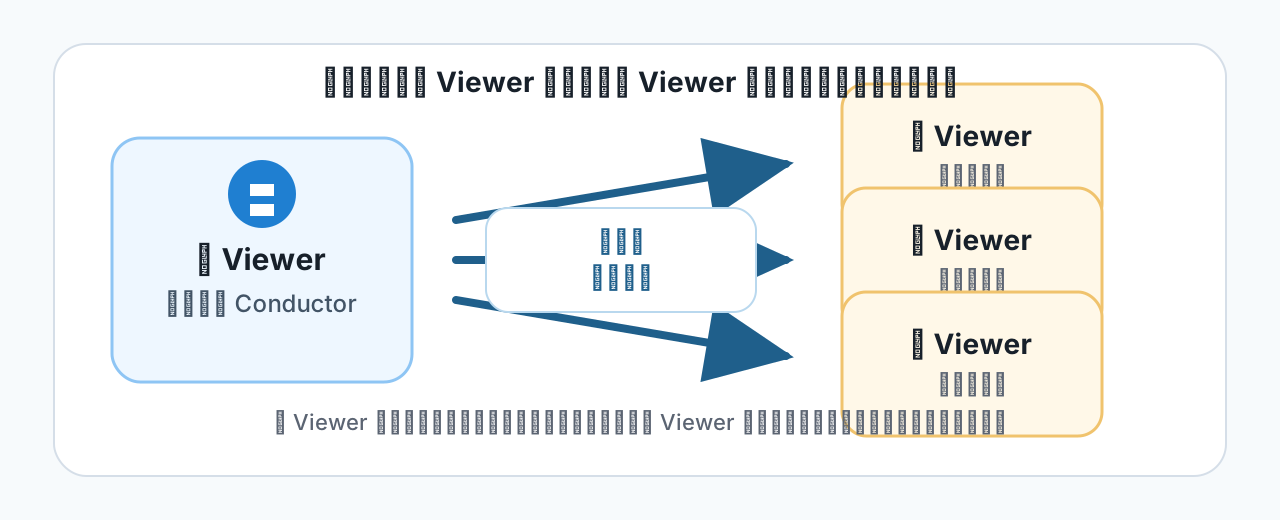
Connecting to an external Conductor (a DAW) works the same way. Only the source of the broadcast changes.
Following a Conductor (Child Viewer)
These settings apply when this device connects to an external Conductor or Local Conductor and follows the received song position.
Conductor Timing Correction
Fine-tunes the timing of what you see and hear against the position that came in. Think of it as the last manual nudge on top of the automatic correction. It is a different setting from the audio start time for one particular song, and from Output Device Latency, which lines up individual output devices.
Use positive values when this Viewer's sound feels late. If the screen or click feels late instead, move it back slightly and test again.
The normal value is 0. Only adjust it when the venue's wireless conditions, output device, or device-specific feel makes the timing noticeably off.
Hosting Local Conductor (Parent Viewer)
These settings apply only when this device becomes Local Conductor. It broadcasts song numbers and in-song positions to nearby Viewers.
Start Delay
This is the wait time between pressing play on the parent Viewer and audio actually starting. Longer values give connected Viewers more time to receive the start position and prepare. 0 starts immediately.
If child Viewers tend to start slightly late during rehearsal, increase the delay a little. If you are only testing on one device, a shorter delay is fine.
Local Conductor Display Name
This is the name nearby Viewers see when they go looking for a Local Conductor. It is what lets performers pick the right parent Viewer when several are within range.
You can leave it blank. When several devices are on stage, a practical name such as "Stage Left" or "Drums" saves confusion.
Examples
If this device only follows a DAW or another Conductor, check the follower timing correction. If this device hosts sync for nearby Viewers, check the host start delay and display name.
If you do neither, there is no need to open this screen.
Related Screens
- Open this from "Sync Details" in Global Settings.
- To find and connect to a Conductor, use Conductor Scan.
- To review song number assignments, use Conductor Setlist Mapping.